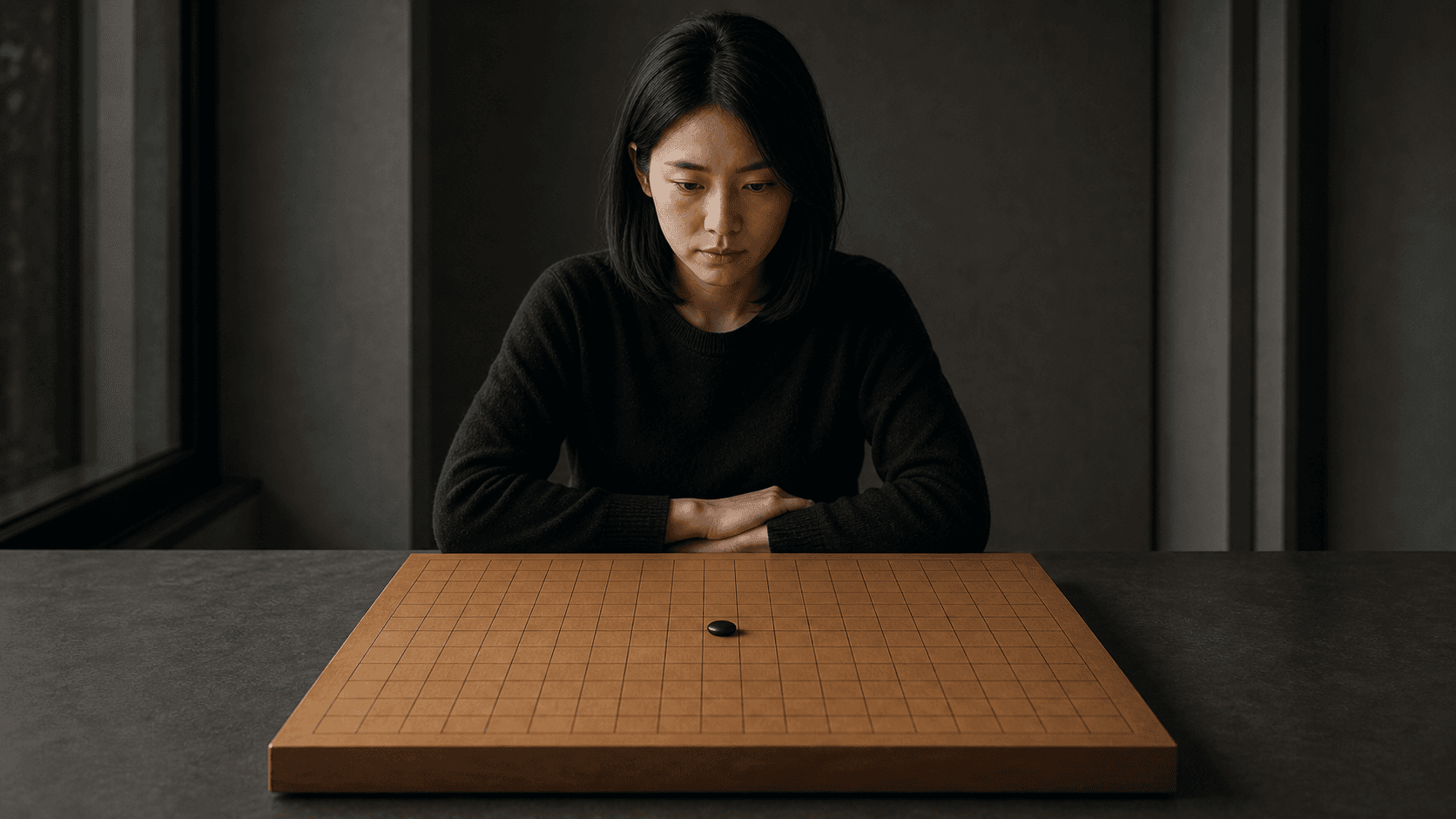
The number of possible Go positions exceeds the number of atoms in the observable universe. This is the statistic that tends to lead descriptions of the game, and it is accurate. But it is not why Go is useful as a development environment for strategic leaders.
Complexity alone is not instructive. The world is complex. Most leadership situations are complex. What leaders need is not more exposure to complexity, they have plenty. What they need is a structured environment where the consequences of their judgments become visible, and where the feedback loop is short enough to be useful.
Every move changes the board
In most strategy simulations and case studies, the environment is static. The 'board' at the start of the exercise is the same board throughout. Decisions are made, but the situation does not evolve in response to them. This is comfortable and manageable. It is also nothing like real strategic work.
In Go, every stone placed changes the territory available to both players. A decision made in the upper left will determine what is possible in the lower right, ten moves later, in ways that were not visible at the time of placement. The environment is genuinely dynamic. Decisions accumulate.
Consequences appear long after the decision. This is the structural feature that makes Go useful, and uncomfortable.
What the game surfaces
Because Go positions develop slowly and consequences are deferred, the game creates a particular kind of pressure: the pressure of not knowing whether you are winning or losing. Unlike chess, where material advantage is relatively legible, Go's territorial logic is often genuinely ambiguous until the final stages. Strong players sit with that ambiguity. Weaker players resolve it prematurely, by convincing themselves they are ahead, or abandoning positions that could have been salvaged.
This behavioural pattern, premature closure in the face of unresolved complexity, is one of the most common forms of strategic failure in organisational life. Go makes it visible.
The speed of the feedback loop
A game of Go at the pace we run immersions takes around forty-five minutes. Within that time, a participant will make dozens of decisions, see their consequences unfold, encounter moments of genuine uncertainty, and have to recover from commitments that didn't hold.
In a real organisational context, that feedback loop might take months or years. By the time the consequence of a strategic decision becomes visible, the person who made it has often moved on, or the intervening variables are complex enough that clean attribution is impossible.
The compression of the feedback loop is not a simulation trick. It is what makes practice possible. You cannot develop a skill you cannot practice.
What we observe in the room
The most useful moments in a FusekiB immersion are not the dramatic ones, the collapse of a position, the decisive turn. They are the quieter moments: a participant who holds back from placing a stone for a long time, visibly sitting with uncertainty. A participant who moves quickly and confidently in territory they haven't fully read. A participant who stops responding to the board in front of them and starts responding to the story they've decided they're in.
These moments are not about Go. They are about how a person thinks under conditions of incomplete information and real stakes. Go just makes them observable.